By all accounts, Louis Sockalexis should have been a professional baseball star whose talent would transcend time.
Unfortunately, that didn’t happen.
After showing a natural ability for the sport when he was a young man on the Penobscot Indian reservation, Sockalexis played ball for the College of Holy Cross.
He then took his talents to Major League Baseball and put on the uniform for the Cleveland Spiders in 1897.
Louis Sockalexis, outfielder for the Cleveland Spiders, was born #OTD in 1871. A member of the Penobscot Nation, he batted .338 as a rookie in 1897, but a severe drinking problem curtailed his career, ending it just two years later. pic.twitter.com/kJPYzAxkA2
— Lost In Left Field (@LILFBaseball) October 24, 2025
Alcoholism and poor decisions chased him from the majors in May 1899.
Sockalexis would then play minor league baseball and coach promising talent in his native Maine.
In 1913, Sockalexis passed away at the age of 41 due to lingering health problems.
Just two seasons later, the Cleveland franchise was renamed the Indians, with some claiming that the name honored Sockalexis’ native heritage.
However, historians have pushed back against that narrative in recent years due to conflicting documentation.
This is the story of Louis Sockalexis.
The Mighty Talent from Penobscot Nation
Louis Francis Sockalexis was born on October 24, 1871, on the Penobscot Indian Island Reservation in Maine.
#OTD in 1871, Louis Francis Sockalexis was born on the Penobscot Indian Island Reservation near Old Town, ME. Today he is recognized as the first Native American to play in the National League. Here’s my painting of him with Holy Cross in 1895. pic.twitter.com/NLDMVIPrm8
— Graig Kreindler (@GraigKreindler) October 24, 2024
He was the son of Francis Sockalexis, a local logger and a future governor of the Penobscot Nation.
Throughout the tribe’s history, athletic ability was prized among the men, and Louis lived up to the billing as a natural athlete in his youth.
During his time as a student at Jesuit’s St. Ann’s Convent School located on the Penobscot Reservation, Sockalexis could more than hold his own in footracing, skating, polo, gymnastics and baseball.
Legend says that Louis had such a good arm that he could toss a baseball the width of the Penobscot River, a distance of 600 feet.
Sockalexis then matriculated at Ricker Classical Institute, a small college in Houlton, Maine.
While attending Ricker, he continued playing baseball and seemed destined to a life of quiet obscurity until fate intervened.
The Holy Cross Contingent
In the summer of 1894, Sockalexis was playing baseball for a local hotel.
One of his teammates was Mike “Doc” Powers, a future MLB catcher.
It just so happened that Powers attended and played for the College of Holy Cross in Worcester, Massachusetts.
He convinced Sockalexis to travel with him to Worcester and enroll at Mount St. James Prep, a school in town run by Holy Cross.
At the time, students at Mount St. James were permitted to play sports for Holy Cross.
Louis Sockalexis ⚾️ The Original Cleveland Indian ⚾️ U Matter pic.twitter.com/HZOLg9sHYg
— Bernie Kosar (@BernieKosarQB) August 11, 2021
Louis took advantage and played baseball, ran track and played on the school’s first football team in 1896.
On the track, he torched fellow competitors in short and medium distances and was known to run 100 meters in 10 seconds.
During his turn on the gridiron, Sockalexis was a swift halfback for the team.
Baseball, however, was Louis’ forte.
Crusader Legends Spotlight | Louis Sockalexis
A largely unrecognized civil rights icon, Sockalexis was a star in many sports, but shined brightest in baseball. His career batting average of .441 still holds as a Holy Cross record nearly 130 years later.https://t.co/HpogZHMBi9 pic.twitter.com/S89S2Qxkg9
— Holy Cross Baseball (@HCrossBaseball) April 21, 2025
In his first season as a Holy Cross batter in 1895, he hit .436, then .444 in 1896.
Sockalexis wowed onlookers in his very first game by stealing no less than seven bases and smashing a grand slam.
“He was a whirlwind on the bases, could field anything that his great speed could get him into, and could throw like a bullet,” a writer from the Worcester Telegram wrote.
His batting average in 1896 was the highest single-season average in program history for more than 80 years.
Self-Sabotage at Notre Dame
Baseball consumed the majority of Sockalexis’ life as he played for Holy Cross as well as semi-pro ball in Maine during the summers.
In 1897, Powers, who was helping to run and play in the Holy Cross program, got an opportunity to coach at Notre Dame.
Powers accepted the job, and Louis went with him, still content on playing college ball at the age of 25.
Initially, it looked like a great fit.
Although there is a dispute about the account, early that year, Sockalexis allegedly played for the Irish in an exhibition game against the New York Giants at the Polo Grounds in New York City.
He faced Amos Rusie, also known as “The Hoosier Thunderbolt,” who was known to nearly decapitate batters with his fastball.
The Sockalexis legend says that Louis clubbed an inside-the-park home run on his first at-bat against Rusie.
Regardless of whether the story is true, Sockalexis was known throughout the East as one of the best baseball players in the nation.
He was dubbed “the Deerfoot of the Diamond” due to his speed, and he could mow down hitters himself when he pitched.
Regrettably, Sockalexis didn’t get the opportunity to do so at Notre Dame.
In March 1897, Louis and another student were expelled from the university after a drunken brawl at a local bar.
It was a foreshadowing of things to come.
Louis Becomes a Spider
The brawl turned out to be a small blessing in disguise for Louis.
Nearly the same time he arrived in South Bend, Indiana, to begin his career at Notre Dame, Patsy Tebeau, the manager of the Cleveland Spiders, also arrived.
While he was playing for Holy Cross, Sockalexis had a coach named James “Chippy” McGarr, who coached for the Spiders during the summer and fall months.
McGarr recommended that Tebeau sign both Sockalexis and Powers to contracts.
The manager went to South Bend and met with both men.
Powers wasn’t interested, but Sockalexis was and signed on the dotted line.
His only condition was that he wanted to wait to play in Cleveland after Notre Dame’s baseball season.
That changed quickly when Louis was expelled.
He left the Notre Dame campus and headed to Cleveland, showing up unannounced at the Spiders’ spring practice location on March 19, 1897.
Tebeau hadn’t expected Sockalexis so early but had him practice with the team anyway.
In short order, the rookie (who lied to team management by saying he was 23) wowed his coach and teammates with his ball skills and running ability.
The origin of the Cleveland Indians name lies in the Native American legend, Louis Sockalexis.
‘Deerfoot of the Diamond’ on ESPN+ ⚾️ pic.twitter.com/MdtZ2S8m5p
— 30 for 30 (@30for30) November 13, 2024
The local papers seemed to be enamored with Sockalexis and soon took to calling the club “Tebeau’s Indians” (in reference to Sockalexis).
By April 1897, the Cleveland Leader wrote, “With four first-class outfielders, five infielders, eight pitchers, and four catchers, the ‘Indians’ of 1897 would seem as well equipped to start out for a pennant as any team in the League.”
Strong Start

After going without a hit in his major league debut, Sockalexis had two RBIs in his second game against the Kentucky Colonels in Louisville.
On this day, April 22, 1897, Louis Sockalexis, a member of the Penobscot Indian tribe of Maine, made his Major Leauge Baseball debut with the Cleveland Spiders and is remembered today as the first Native American, and first recognized minority, to perform in the National League. pic.twitter.com/0brCmjuy4B
— NDNSPORTS.COM (@ndnsports) April 22, 2024
A trip to Cincinnati brought war whoops from the home crowd, and Louis smoked a double and two singles during the game.
On April 30, Sockalexis hit his first major league home run against the St. Louis Browns.
He then hit his second home run on May 5 against the Cincinnati Reds.
It took Cleveland a few games to finally get a win, but Sockalexis was a rising star with a .372 batting average after 20 games and spectacular fielding and throwing from his right field position.
Good games were followed by even better games, but the rookie did have a problem with left-handed pitchers and occasionally misjudged balls hit to him in the outfield.
Still, Tebeau liked what he saw in his new player.
“He is a sensible fellow and sees his weakness, which is a good trait in a young player,” said Tebeau.
Warning Signs
Although he was cheered by some people, the vast majority of fans, both home and away, let Sockalexis know their disdain that an Indian was playing baseball.
DAY 15 – Louis Sockalexis “the Deerfoot of the Diamond” – Penobscot Indian Island Reservation – MLB Cleveland Spiders – American Indian Athletic Hall of Fame pic.twitter.com/DYWNfXhkuF
— Parkin (@paintsbyparkin) June 15, 2025
Racist behavior toward Sockalexis was noted by local sports writers.
“Columns of silly poetry are written about him, [and] hideous looking cartoons adorn the sporting pages of nearly every paper,” commented Elmer Bates in Sporting Life. “He is hooted and bawled at by the thimble-brained brigade on the bleachers. Despite all this handicap, the red man has played good, steady ball, and has been a factor in nearly every victory thus far won by Tebeau’s team.”
Not only did Sockalexis get an earful from crowds, but he also had a difficult time abstaining from alcohol.
On July 3, he imbibed so much liquor that he fell out of a second-story window and injured his ankle.
Sockalexis tried to return to the diamond, but Tableau sent him home to rest.
Instead, Louis actually spent the time visiting several bars in the Cleveland area.
He returned to the lineup a few days later and was able to connect well in the batter’s box despite the gimpy ankle.
Then, in mid-July, the Boston Beaneaters came to town, and Sockalexis played poorly.
In the first and fifth innings in a game on July 12, he misjudged a fly ball, dropped another and whiffed on a ground ball that went between his legs.
Sportswriters later noted that it looked like the rookie was playing fully inebriated, and Tebeau took him out of the game.
Merciful Ending to 1897
By then, Spiders owner Frank Robison was at his wits’ end over Sockalexis’s alcohol consumption.
An 1897 program featuring League Park’s residents, the Spiders, at New York. Note the Cleveland lineup has Hall of Famers Jesse Burkett, Bobby Wallace and possible starting pitcher Cy Young. Also, Native American Louis Sockalexis hits third. Great find @KeithOlbermann! pic.twitter.com/v6NiDLoDzN
— League Park (@LeagueParkCle) February 8, 2022
Louis was kept home when Cleveland went on a West Coast road trip, and Robison addressed the media.
“I think I can truthfully say,” the owner told The Sporting News, “that I have done everything I could for Sockalexis, and he has repaid me, and the Cleveland club, by the basest ingratitude. I have waited as long as I could, and have given him every chance to do what is right, and only punished him when I felt that I must do so in justice to myself and the rest of the club.”
Tebeau left Sockalexis behind again during an August road swing, and he barely played the remainder of the season.
When the last game was played, Sockalexis had a .338 batting average, 94 hits, 38 strikeouts, 42 RBIs, three home runs, 43 runs scored and 66 stolen bases.
In Hot Water
On any other team, Sockalexis may have been kicked to the curb.
Cleveland, however, suffered from low attendance, and Louis had played just well enough in 1897 that Robison and Tebeau gave him another shot in 1898.
Sockalexis said all the right things and told anyone who would listen that he was on the straight and narrow.
Then he wasn’t.
When the team reported in March 1898 for spring training in Hot Springs, Arkansas, Sockalexis missed the train, to the manager’s disgust.
“It’s a pity [Sockalexis] doesn’t keep straight,” sighed Tebeau to the writers on the train.
Louis showed up in Arkansas two days later and again pledged his willingness to clean up his act.
He stayed sober during the spring but rarely hit a meaningful ball.
Tebeau was so worried about Sockalexis’s behavior and awful hitting that he started Harry Blake in right field for the majority of the year.
Louis didn’t play much in ‘98 and ended the season with a .224 average, 11 runs, 10 RBIs and 15 hits.
Cleveland Releases Louis

In February of 1899, Sockalexis’s mother passed away, and that event didn’t help his already fragile psyche.
When he reported for spring training in March, Louis was so out of shape that he was hardly recognizable, an alarming contrast to the stellar athlete from two years prior.
“I can give him twenty yards and beat him in a hundred. … You would not know the big Indian if you saw him now,” said 38-year-old teammate Charles Zimmer.
Tebeau was so angry that he kept Sockalexis away from training with the team.
Happy @SABRbbcards birthday to early Cleveland Spiders star Louis Sockalexis. For connections between Sockalexis and the current name of the Cleveland baseball club, see this article by @JPosnanski.https://t.co/aCkkRoBBai pic.twitter.com/knFbF416fA
— SABR Baseball Cards (@SABRbbcards) October 24, 2020
Later that spring, Robison was tired of losing money hand over fist in Cleveland and bought the St. Louis Browns.
The owner then sent all his best athletes, including Tebeau, to St. Louis while keeping Sockalexis and spare parts in Cleveland.
Louis lasted all of seven games that season and batted .273 with six hits and two RBIs.
After he was involved in a drunken fight with theatre patrons in Cleveland in May, the Spiders cut him, and Sockalexis’s pro career was finished.
In barely three years of work, Sockalexis had a .313 batting average, 115 hits, 54 runs, three home runs and 55 RBIs.
He made enough of an impact on the Penobscot Nation that Louis was inducted into the American Indian Athletic Hall of Fame.
The End
Following his release from Cleveland, Sockalexis played minor league ball for a few months.
From 1900 through 1902, he spent time in and out of jail and dabbled a little more in the minors, but never did well enough to get a call to a major league club.
In 1903, Sockalexis returned home to Maine and worked as a ferryman, local semipro baseball umpire, and even taught the game to some of his fellow Penobscot tribesmen.
He didn’t drink as much, but Louis’s health was bad enough that he caught colds easily and suffered from frequent fevers and rheumatism.
Late in the fall of 1913, he started working with a logging crew.
On Christmas Eve, Sockalexis was helping to cut down a pine tree when he had a heart attack and died.
On this date in 1913, Louis Sockalexis passed away at the age of 42. He signed with the Cleveland Spiders in 1897 and only played 3 seasons. However, in only 94 games he was able to make a lasting impression on Cleveland Baseball with his charisma and athletic ability. #OTD pic.twitter.com/azcmidM7bF
— Zinn Beck (@ZBDigitalibrary) December 24, 2020
He was 42 years old.
Those who knew him best mourned for Sockalexis and what could have been.
“He was a wild bird,” said former Spiders shortstop Ed McKean. “He couldn’t lose his taste for firewater. His periodical departures became such a habit [that] he finally slipped out of the majors. He had more natural ability than any player I have ever seen, past or present.”
Name Dispute
In 1915, Nap Lajoie left his namesake Cleveland Naps baseball team to play for the Philadelphia Athletics.
Following his departure, a newspaper in town sent out a call to fans to help rename the franchise.
“Indians” was eventually chosen, and the narrative for several decades was that the name was inspired by Sockalexis.
However, by 2020, that idea was largely shot down by baseball historians.
The abolishment of offensive nicknames abounded in professional sports that year, and the Indians were one of the organizations that strongly considered changing its name.
Before the Cleveland Indians changed their name, I spoke with Sundance, the executive director of the Cleveland American Indian Movement.
He explained what made Chief Wahoo racist, and why a name change was needed.
My writing from 2019 here ✍️https://t.co/Nod1JTrBtk
— Nick Pedone (@NickPedone12) July 20, 2025
As fans pushed back with the familiar trope that the name wasn’t offensive, historians pointed out that Sockalexis was the recipient of harsh abuse and racist epithets during his short career.
When he played, the country was still embroiled in the American Indian Wars, and famed frontiersman Buffalo Bill was traveling the country with his Wild West Show.
Much of the show featured Native Americans as “savages” who were cruel and violent.
That didn’t help Americans’ view of Indians and played a large part in the war whoops and catcalls that Sockalexis experienced in and away from Cleveland.
Furthermore, Louis barely played three years in town and was largely looked down upon for his alcoholism.
Just what we needed tonight. The Cavs descending to the seventh layer of hell wasn't enough, now I have to once again point to the sign that Chief Wahoo and the Indians aren't honoring anybody. This was how we treated the figurehead, Louis Sockalexis, when he was here. https://t.co/bZ3xrVu2cA pic.twitter.com/7Y1KUQ9PCj
— John Stevens (@johnnyfire817) May 7, 2025
The Spiders may have briefly added the nickname “Indians” because of Sockalexis’s good play in 1897, but they were still known as the Spiders in 1899 when he was released.
Ed Rice, a writer and historian from Maine, wrote an extensive history about Sockalexis and the Indians’ nickname in 2020.
“It is inspired by Louis, but for all the wrong reasons,” Rice said. “When fans remember that nickname from the 1890s again in 1915, when it’s chosen as the official team name, it’s because of him. And more likely, people probably didn’t actually remember Louis in 1915, but they remembered that nickname for the team.”
When the Cleveland Plain Dealer announced the name change in 1915, Rice points out that, “Sockalexis was not mentioned in any of the news accounts or that large cartoon in the Cleveland Plain Dealer, announcing the adoption of the new name. [We] need to be careful with the word ‘inspire,'” he said. “The semantics are the issue here. We need a better word. Inspire sounds like a positive thing.”
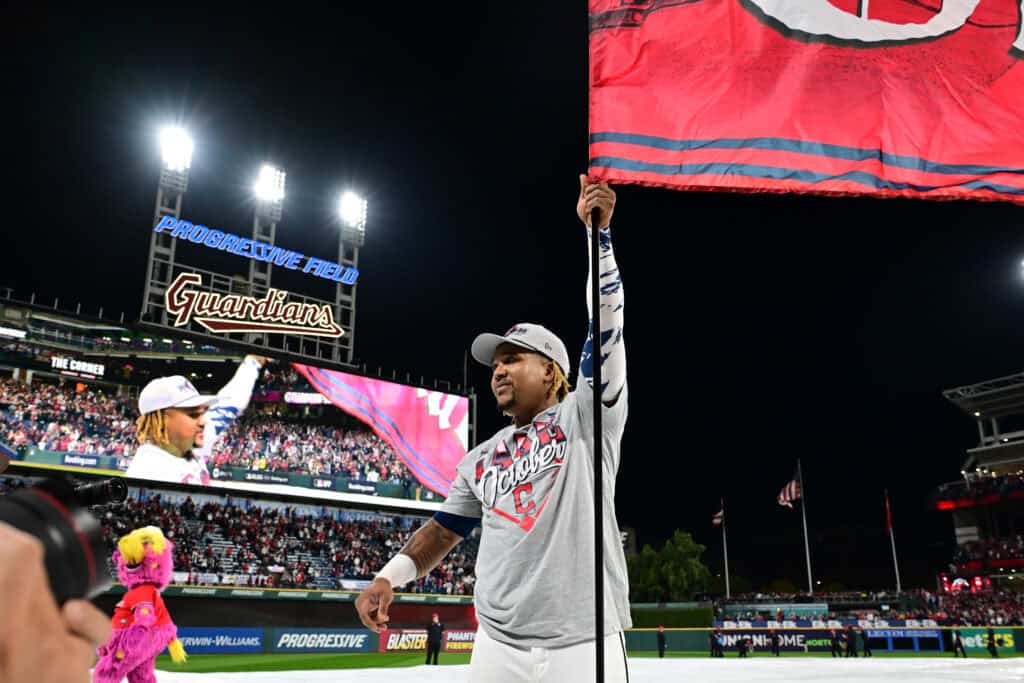
In 2022, the franchise agreed that a change was in order and adopted the new moniker “Guardians.”
References
https://www.americanindianmagazine.org
https://theworcesterguardian.org
https://www.penobscotnation.org
https://www.baseball-reference.com
NEXT: The Life And Career Of Nap Lajoie